
A History of Proposition 13: Why Assessment Protection Matters
For many California families, the home is more than just real estate; it is a sanctuary and the primary vehicle for intergenerational wealth. However, before 1978, that sanctuary was under constant threat from a volatile and often unpredictable property tax system. To understand why modern succession planning is so critical, one must first understand the "taxpayer revolt" that led to Proposition 13 and why its core promise—assessment protection—remains the bedrock of California homeownership today.

The Pre-1978 Crisis: A System Without Predictability
Before the passage of Proposition 13, California property taxes were based on a "market value" system that was updated annually. As home prices skyrocketed in the 1970s, so did property tax bills. It was not uncommon for a homeowner to see their tax bill double or triple in a single year, simply because their neighborhood became popular.
This created a crisis of stability. Seniors on fixed incomes were being "taxed out of their homes," forced to sell because they could no longer afford the annual levies on a house they had already paid off. It was this environment of financial fear that prompted Howard Jarvis and Paul Gann to lead the movement for a constitutional amendment that would prioritize predictability over market volatility.
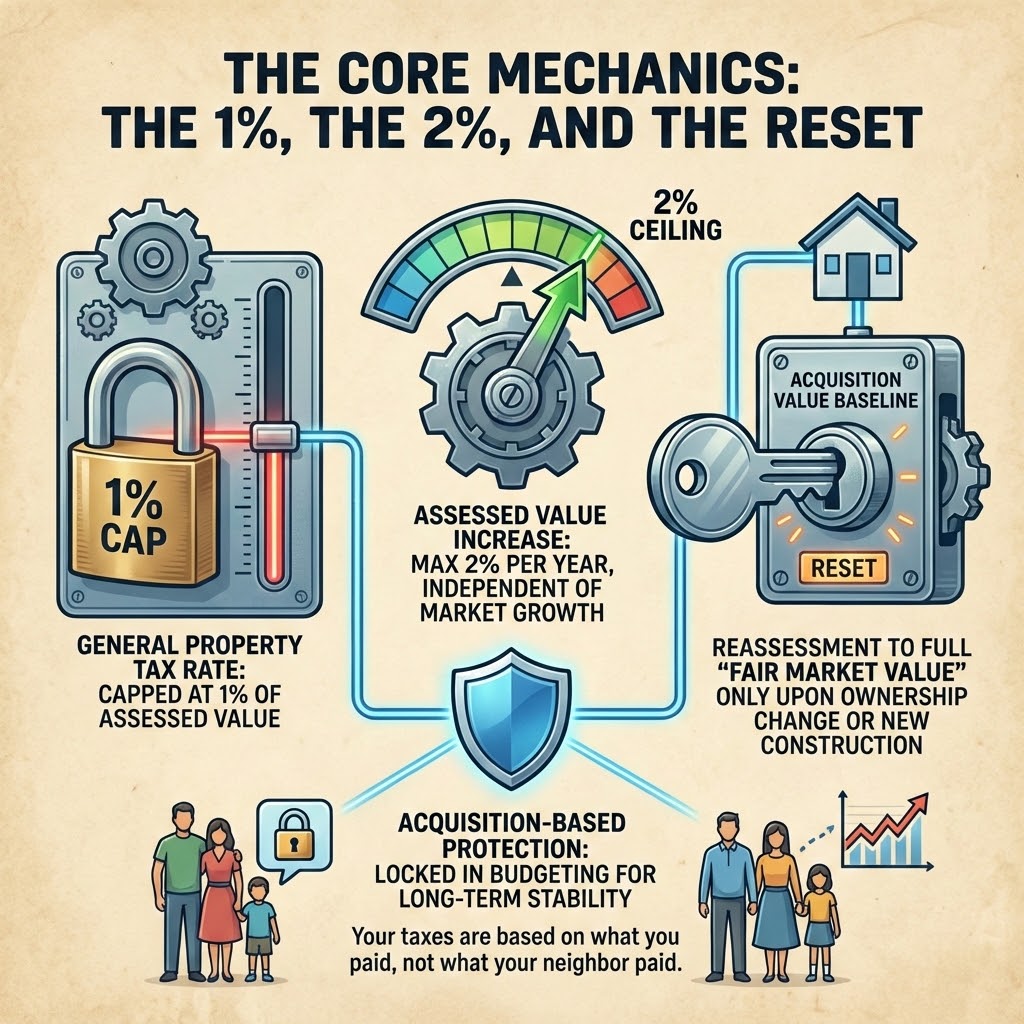
The Core Mechanics: The 1%, the 2%, and the Reset
Passed by a landslide in 1978, Proposition 13 fundamentally changed the relationship between the government and the property owner. It established three "golden rules" that define California real estate to this day:
The 1% Cap: The general property tax rate was capped at 1% of the property’s assessed value (plus local voter-approved bonds).
The 2% Ceiling: The assessed value of a property can only increase by a maximum of 2% per year, regardless of how much the home's actual market value grows.
The Acquisition Value Baseline: A property is only reassessed to its full "fair market value" when it changes ownership or undergoes new construction.
This created an "acquisition-based" system. Your taxes are based on what you paid for the home, not what your neighbor just paid for theirs. This protection allows families to budget for the long term, knowing that their largest annual expense is effectively "locked in."
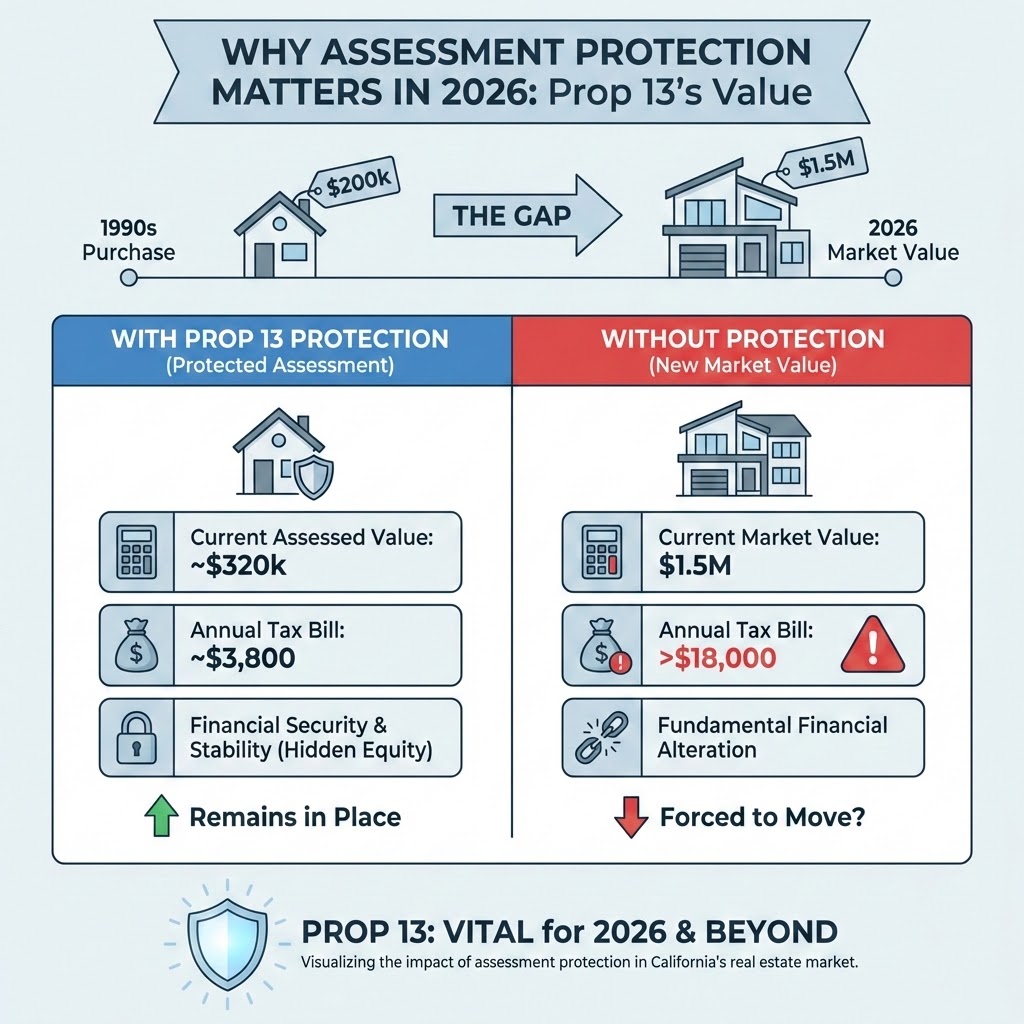
Why Assessment Protection Matters in 2026
As we look at the 2026 real estate market, the value of Proposition 13 protection has never been higher. With California home prices continuing to climb and local effective tax rates (including new school and infrastructure bonds) often reaching 1.15% to 1.30%, the gap between a "protected" assessment and a "new" assessment is vast.
For a family that purchased a home in the 1990s for $200,000, their current assessed value might only be $320,000, despite the home being worth $1.5 million today. This protection represents a "hidden equity" that allows the family to remain in place. Without it, their annual tax bill would jump from roughly $3,800 to over $18,000—a difference that would fundamentally alter their financial security.
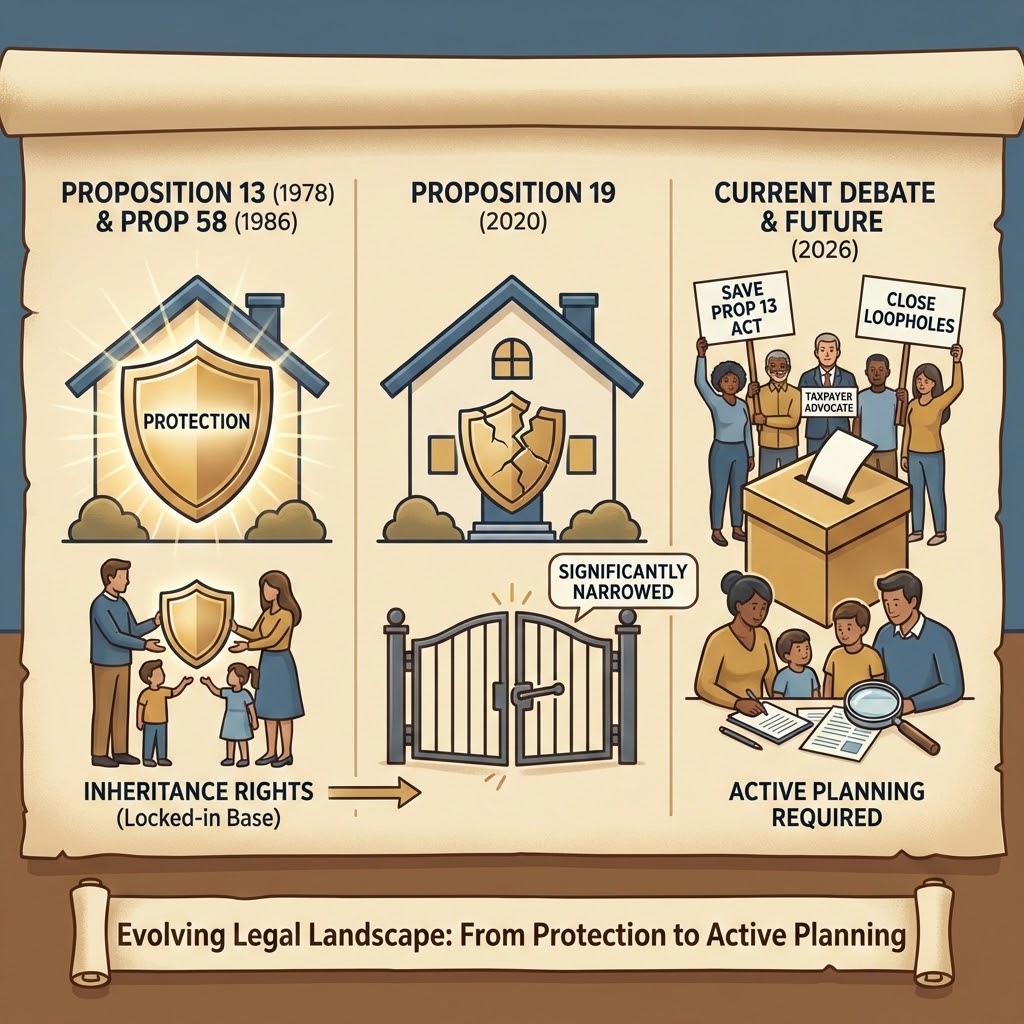
The Modern Threat: The Erosion of Inheritance Rights
While Proposition 13 protected the owner, later amendments like Proposition 58 (1986) protected the heirs, allowing parents to pass that "locked-in" tax base to their children. However, as discussed in our deep dive into Proposition 19, those inheritance protections have been significantly narrowed.
Today, the "History of Proposition 13" is entering a new chapter. With the Save Prop 13 Act of 2026 currently a topic of significant debate among taxpayer advocates, there is a renewed focus on closing the loopholes that have allowed some jurisdictions to bypass the two-thirds vote requirement for special taxes. This ongoing legal evolution means that simply "knowing the history" isn't enough; families must actively plan to maintain the protections that previous generations fought to establish.
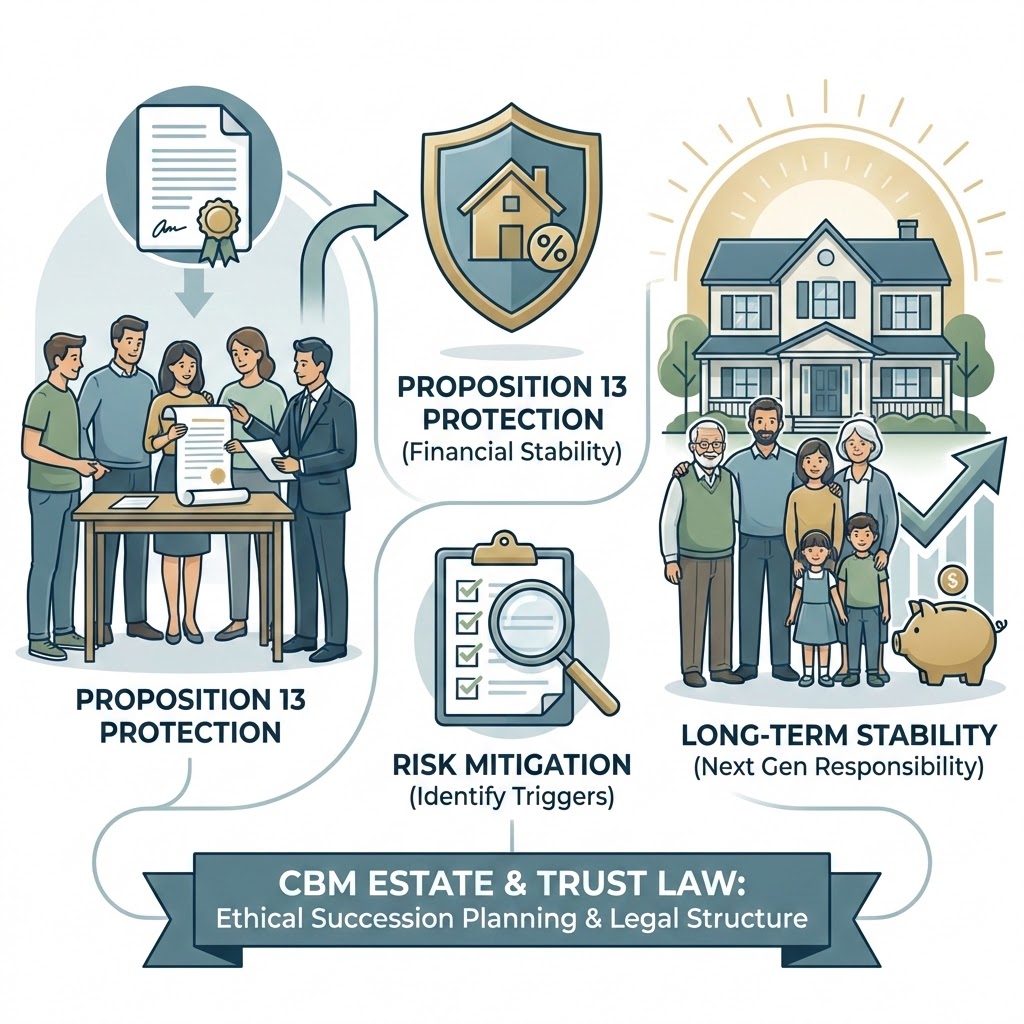
The Ethical Role of Succession Planning
Assessment protection only works if it is defended through proper legal structure. At CBM Estate & Trust Law, we view Proposition 13 not as a loophole, but as a hard-won right to financial stability. Our role is to help families evaluate their ownership history and design succession strategies that respect current law while mitigating the risk of an accidental reassessment.
We focus on:
Succession Governance: Ensuring that transitions of property between generations are handled with the precision required by the County Assessor.
Risk Mitigation: Identifying "change in ownership" triggers before they happen.
Long-Term Stability: Helping the next generation understand the financial responsibilities of maintaining a "protected" family home.
A Reassuring Path Forward
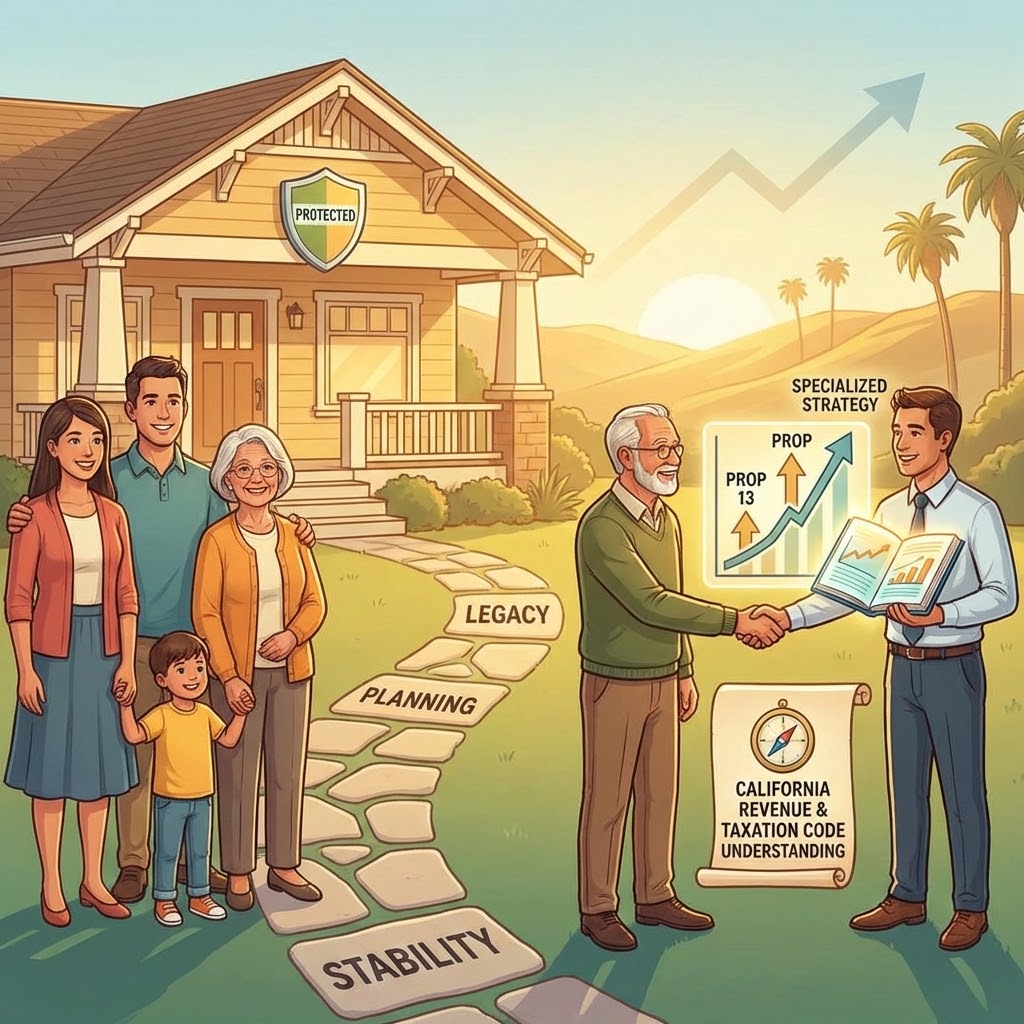
The history of California property tax is a story of families fighting for the right to stay in their homes. While the rules have become more complex—especially with the introduction of Proposition 19—the core goal remains the same: protecting your legacy from unpredictable tax spikes.
If you own property that has been in your family for years, you are holding a piece of California history that carries significant tax advantages. Protecting those advantages for your children requires more than just a standard will or trust; it requires a specialized understanding of the California Revenue and Taxation Code.
Contact CBM Estate & Trust Law today to schedule a consultation. Our attorneys can help you review your property’s history and develop a customized planning strategy to protect your family’s future.
