
The Heritage of the Family Home: Protecting the Intergenerational Bridge
For many families, the relationship between a grandparent and a grandchild is anchored by a specific place—a family home where traditions took root and stories were passed down. This property is more than real estate; it is a tangible piece of a family’s history and often the most significant financial legacy a grandparent can leave behind. However, the dream of keeping that home "in the family" often collides with a harsh financial reality: the potential for a massive spike in property taxes that could make the gift impossible to maintain.

How the Rules of Inheritance Have Shifted
Historically, California families relied on a relatively seamless path for transferring property across generations without triggering a "tax reset." For decades, the law allowed for a significant amount of property to move from parents to children, and in certain cases, grandparents to grandchildren, while keeping the original, lower tax base. But as the state's legal landscape evolved, the windows of opportunity narrowed. Understanding these shifts is the difference between a successful transition and an accidental tax crisis.

When the Transfer Works: The Technical Breakdown
Under current laws, specifically following the implementation of Proposition 19, a grandparent-to-grandchild transfer is only eligible for tax exclusion under very specific conditions:
The "Parental" Requirement: The transfer only qualifies if all parents of the grandchild (who are the children of the grandparent) are deceased as of the date of the transfer.
The Principal Residence Rule: The property must have been the grandparent's principal residence, and it must become the grandchild's principal residence within one year of the transfer.
The $1 Million Value Limit: The exclusion applies to the first $1 million of "taxable value" added to the original assessed value. If the home has appreciated significantly beyond that, a partial reassessment may still occur.
Filing Deadlines: Specific forms must be filed with the County Assessor within strict timeframes to claim the exclusion.

Why This Matters: Budgeting for the Next Generation
For grandparents in their 60s looking to secure their family’s future, or for younger adults in their 20s and 30s hoping to step into a family home, these rules are the "pain or gain" center of estate planning.
Without this eligibility, a home that was taxed at a 1990s value could be reassessed to its 2026 market value instantly. For a grandchild just starting a career or a family on a fixed budget, a property tax bill jumping from $3,000 to $15,000 a year often results in a forced sale. Preserving the "tax base" isn't just about saving money; it’s about making it physically and financially possible for the third generation to live in the home their grandparents built.
The 2026 Landscape: Why "Now" is Different
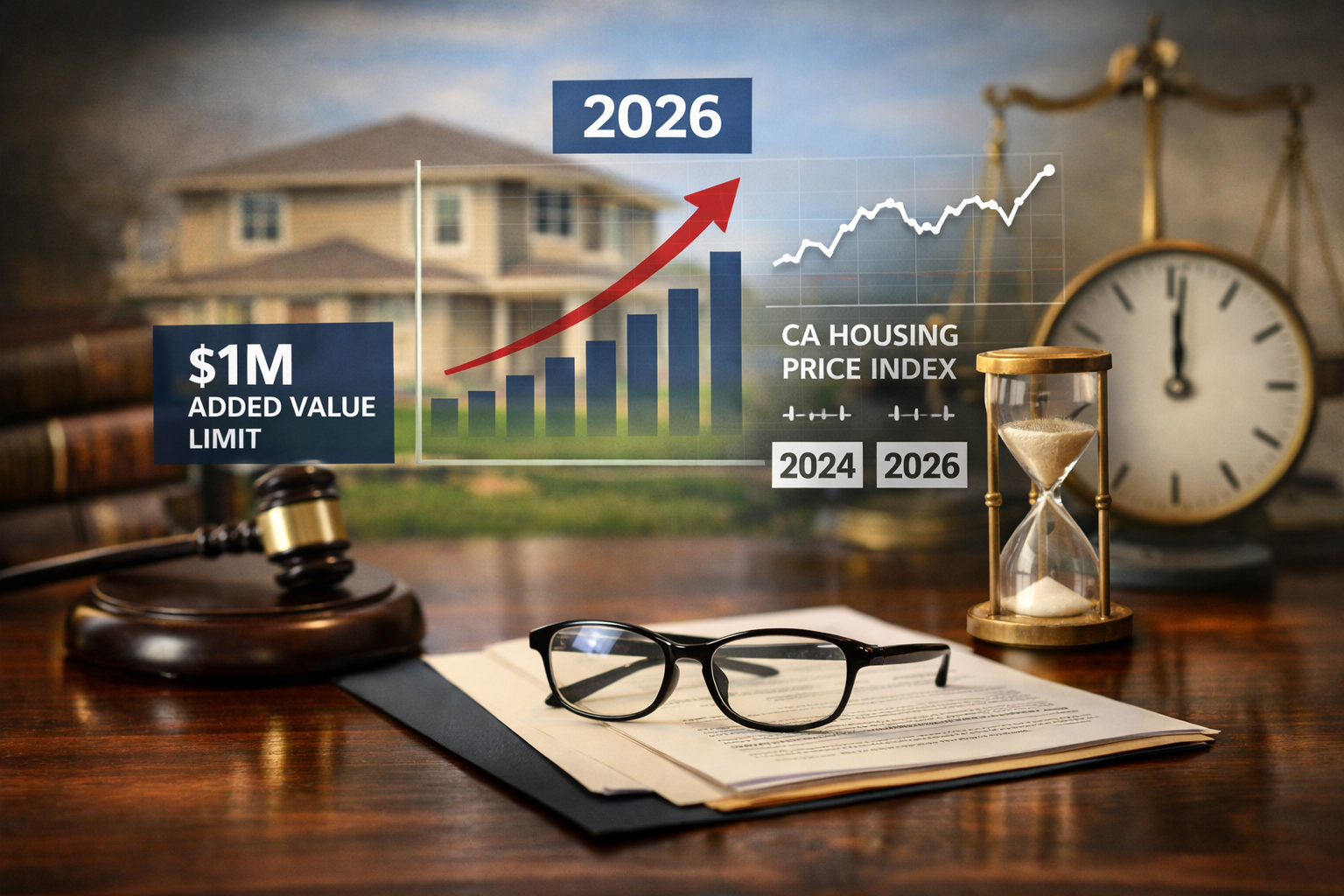
As we navigate the legal environment of 2026, the scrutiny on intergenerational transfers has never been higher. The grace periods and "loopholes" of the past have largely been replaced by a rigorous compliance framework. Because the $1 million "added value" threshold is adjusted every two years based on the California House Price Index, the math on these transfers is constantly shifting. Waiting to plan until a crisis occurs—such as a sudden illness or passing—often means missing the narrow window where these tax protections are available.
Planning Over Loopholes: Your Risk Mitigation
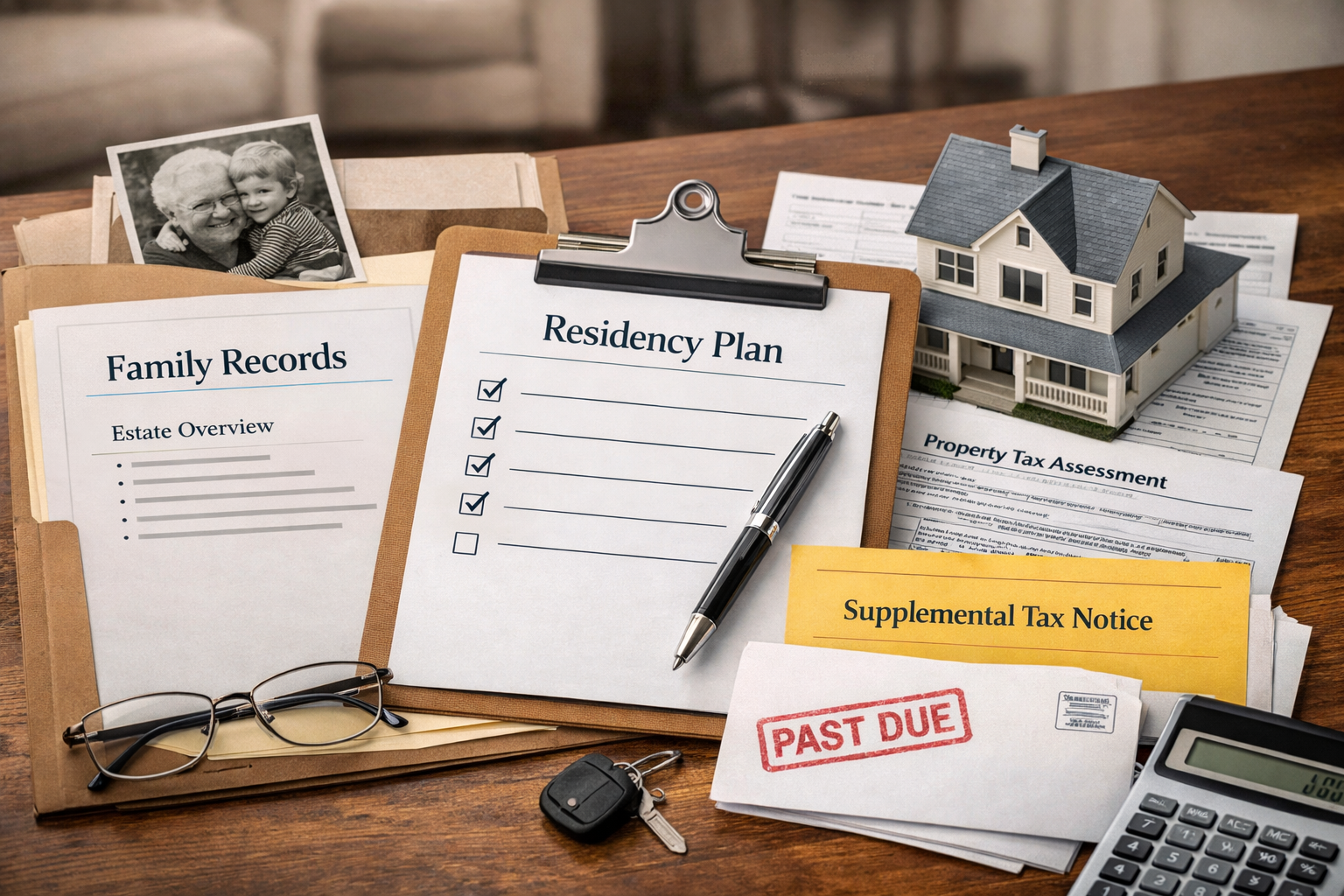
At CBM, we don't believe in "gaming the system." Instead, we believe in the power of a proactive Narrative. Navigating a grandparent-to-grandchild transfer requires a meticulous "look-back" at family records and a forward-looking strategy for residency. We position ourselves as your guide to ensure that every box is checked and every filing is accurate. Our goal is to mitigate the risk of an unexpected "Supplemental Tax Bill" that could jeopardize your family’s long-term housing security.

The Compliance Guardrail
It is vital to understand that the County Assessor’s office has the final authority on all reassessment decisions. The laws governing Proposition 19 are complex, and eligibility is determined on a case-by-case basis depending on the specific family structure and the timing of the transfer. This content provides an overview of the landscape but does not constitute legal or tax advice. Every family's situation is unique, and the interaction between state law and local assessment practices requires professional oversight.

Start the Conversation for Your Family’s Future
The window for a tax-efficient grandparent-to-grandchild transfer is narrow, but with the right planning, it remains a powerful tool for legacy preservation. If you are considering how to pass your home to the next generation, let’s ensure the path is clear.
Contact CBM Estate & Trust Law today to schedule a consultation. Our attorneys can help you review your property’s history and develop a customized planning strategy to protect your family’s future.
