
The Annual Notice: A Document of Legacy and Responsibility
For many California families, the arrival of a manila envelope from the County Assessor’s office is met with a mix of confusion and mild anxiety. It’s easy to view this piece of paper as a mere bureaucratic hurdle, but in reality, it is a status report on your most significant asset. This document represents the bridge between your family’s history—the years of equity you’ve built—and the future security of your home. Understanding how to read it is not just about taxes; it is about ensuring the legacy you are building remains on a firm financial foundation.

The Foundation of Fairness: How We Got Here
The structure of the California property tax notice is a direct reflection of the state's unique legislative history. For decades, the "base year value" system has served as a shield for homeowners, born out of a time when skyrocketing property values threatened to displace long-term residents. Experts in California real estate recognize that these forms are designed around the protections of Proposition 13 and the newer, more complex transitions mandated by Proposition 19. While the layout might seem dense, every box on that form exists because of a law designed to balance the needs of the community with the rights of the individual property owner.
Deciphering the Code: A Layman’s Guide to the Notice
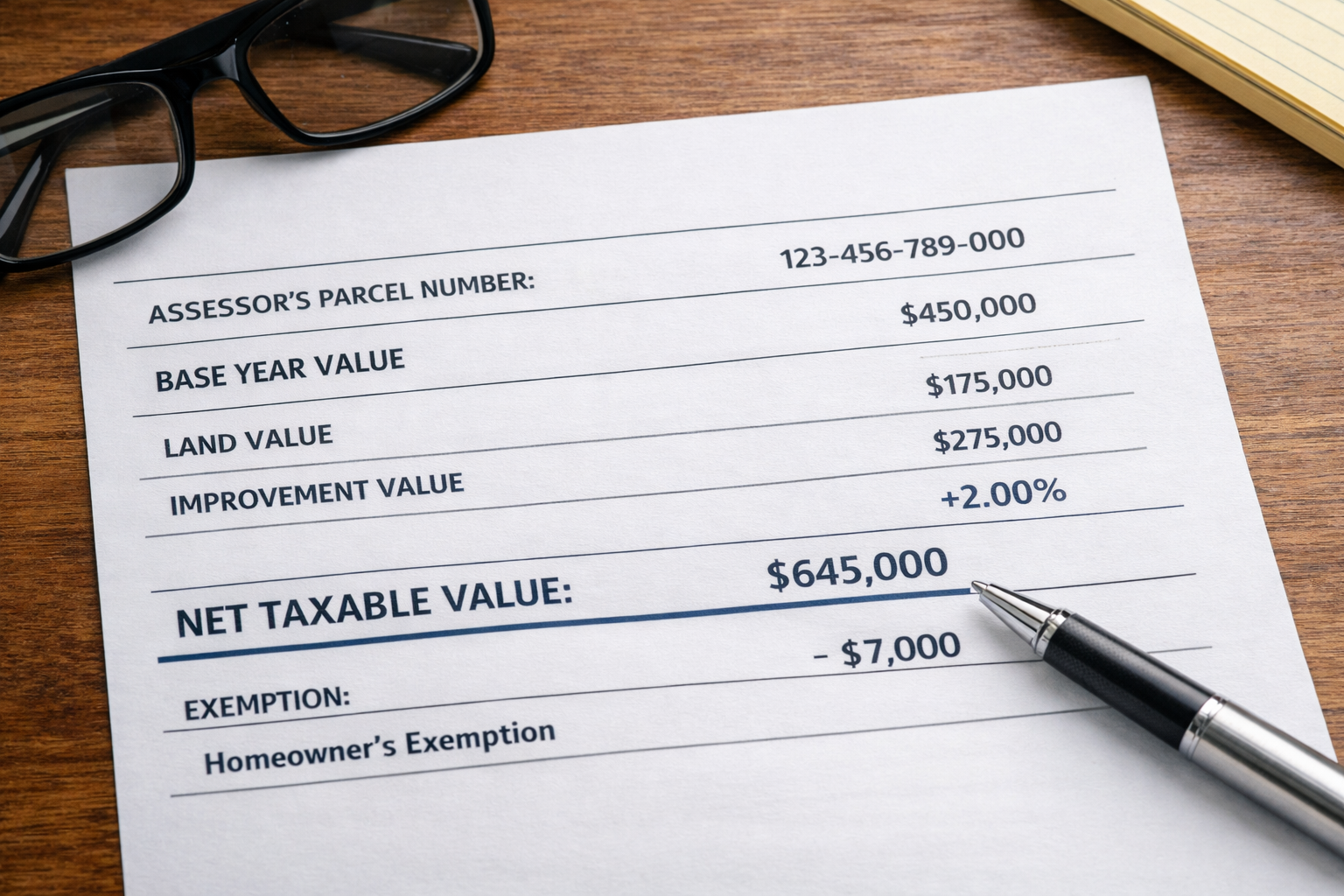
When you open your assessment notice, ignore the jargon and look for these key markers. They tell the story of your property's taxable life:
Assessor’s Parcel Number (APN): Think of this as your home’s Social Security number. It is the primary way the county identifies your specific slice of California.
Base Year Value: This is the "starting line." It is typically the market value of the home at the time you purchased it or completed major new construction.
Net Taxable Value: This is the most important number on the page. It is the value that will actually be multiplied by your local tax rate to determine your bill.
The 2% Inflation Factor: Under Proposition 13, you should see that your "Land" and "Improvements" values generally don’t increase by more than 2% each year, unless there was a change in ownership.
Exemptions (e.g., Homeowner’s Exemption): Look for a $7,000 reduction. If you live in the home as your primary residence, this small but essential credit should be reflected here.

Why It Matters: Budgeting for the Next Generation
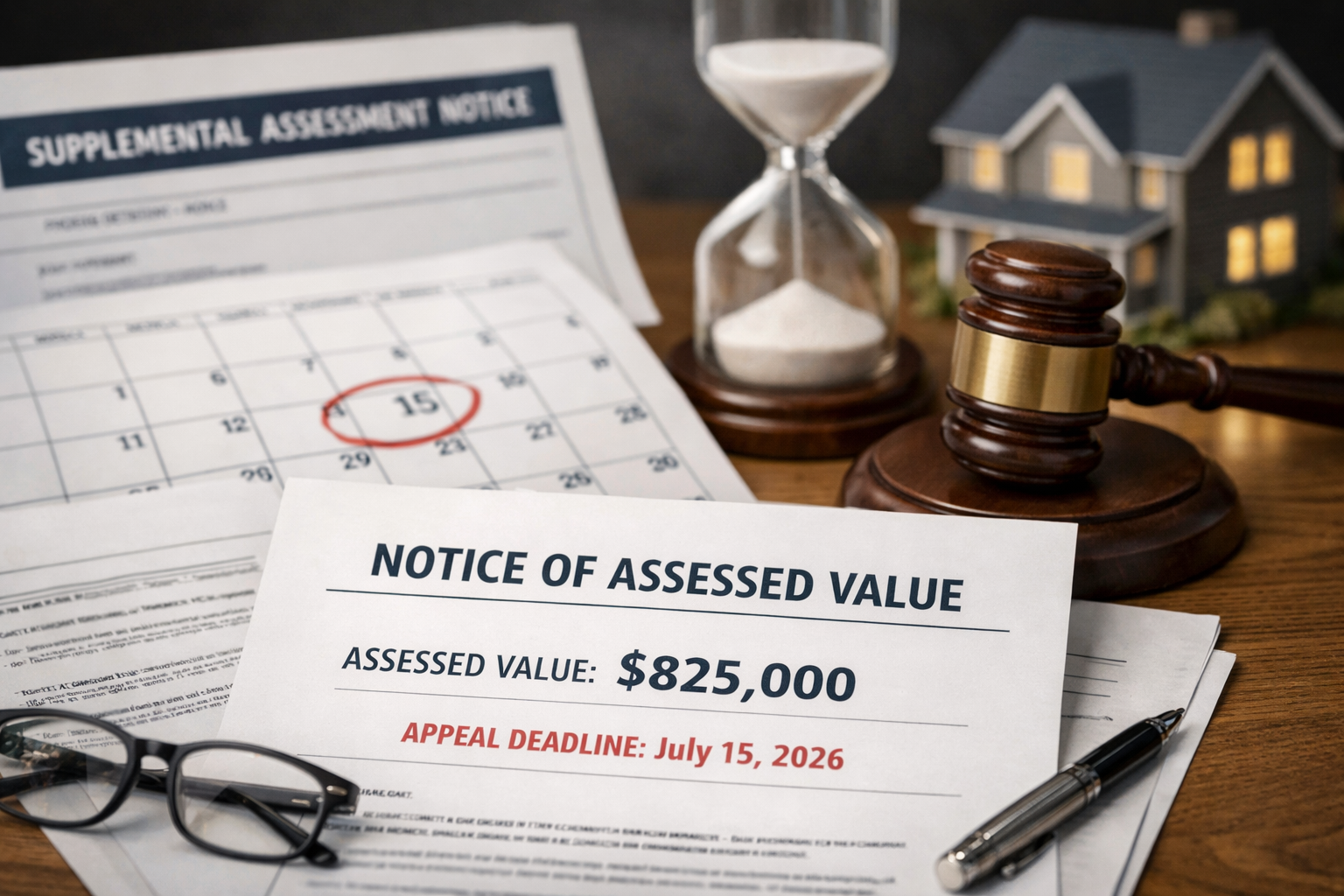
For homeowners aged 20 to 65, this notice is a critical tool for long-term planning. If you are a young homeowner, catching an error in your "Base Year Value" now can save you tens of thousands of dollars over the next thirty years. If you are a senior on a fixed income, verifying that your assessment hasn't been improperly triggered by a recent family transfer is the difference between staying in your home and being forced to sell. Your assessment notice is the "early warning system" for your household budget; by the time the actual tax bill arrives, the window to contest an unfair valuation has often already closed.
The 2026 Landscape: New Rules, New Urgency
As we navigate the legal environment of 2026, the stakes for reading these notices correctly have never been higher. With the full implementation of Proposition 19, the rules regarding how "Assessed Value" transfers between parents and children have tightened significantly. We are seeing more frequent "Supplemental Assessments" as counties aggressively update their rolls. In 2026, a "Notice of Assessed Value" is no longer a formality—it is a time-sensitive document. If the value listed doesn't align with your expectations, the deadline to file an appeal is often just weeks away.

Your Guide Through the Maze
At CBM, we don't just see numbers on a page; we see a narrative of your financial health. Our role is to act as your "guide," helping you interpret these notices through the lens of a comprehensive wealth and legacy plan. We focus on proactive risk mitigation—identifying potential over-assessments before they become permanent line items on your tax bill. Rather than seeking aggressive loopholes, we ensure that every protection you are legally entitled to is reflected in the Assessor's records.
The Compliance Guardrail
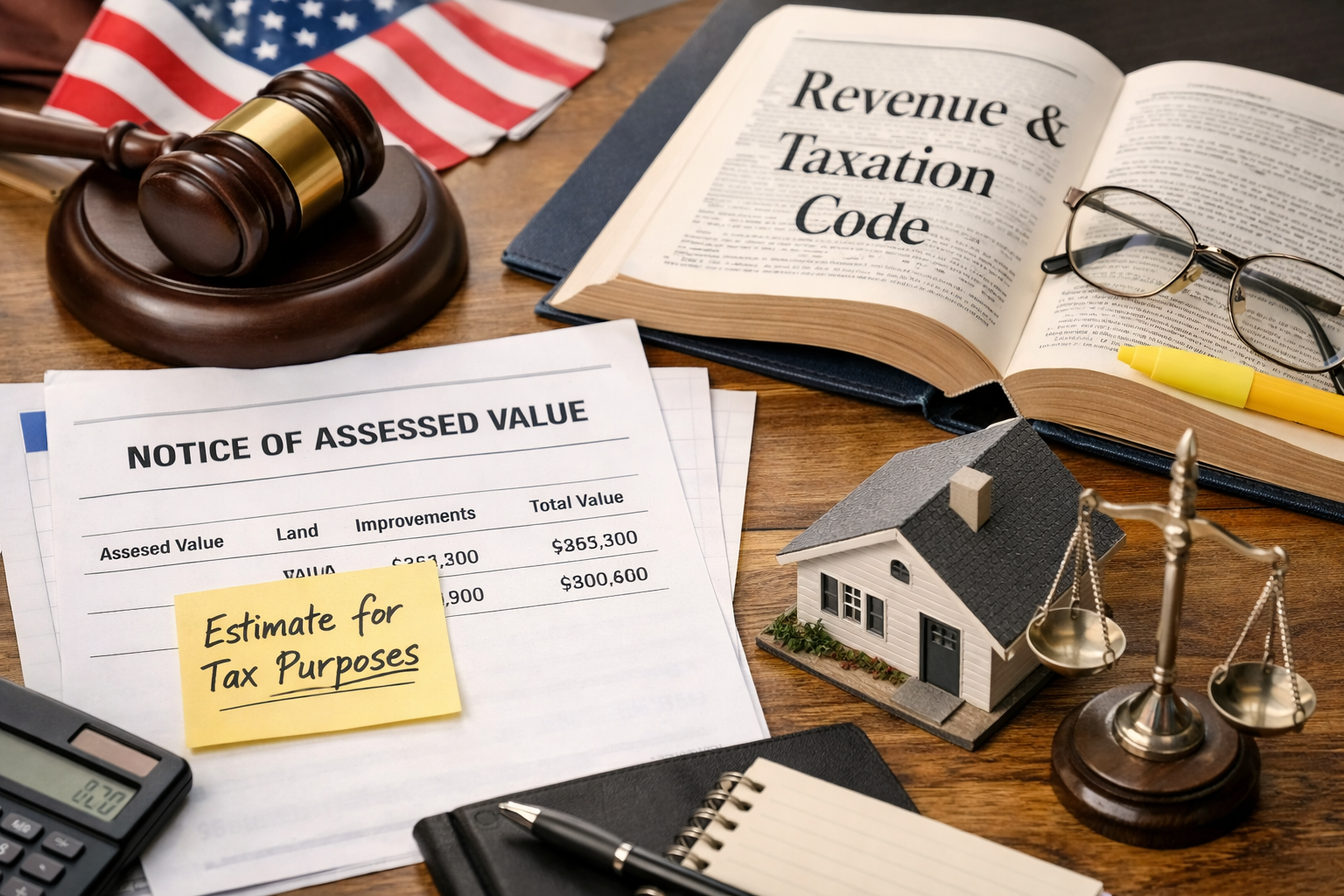
While this guide provides a framework for understanding, it is vital to remember that property tax law is exceptionally nuanced. The County Assessor operates under strict state mandates, and local variations between counties can occur. A "Notice of Assessed Value" is an estimate provided for tax purposes and does not constitute a formal appraisal for a bank loan or a sale. Because of the complexity of the Revenue and Taxation Code, we always recommend reviewing your specific notice with a professional who understands the current year’s administrative guidelines.

Is Your Assessment Accurate?
Your home is your sanctuary, but the paperwork surrounding it shouldn't be a source of stress. If your recent assessment notice looks different than expected, or if you want to ensure your family's tax base is protected for the future, we are here to help.
Contact CBM Estate & Trust Law today to schedule a consultation. Our attorneys can help you review your property’s history and develop a customized planning strategy to protect your family’s future.
